Open sleep data supports advances in continuous EEG monitoring
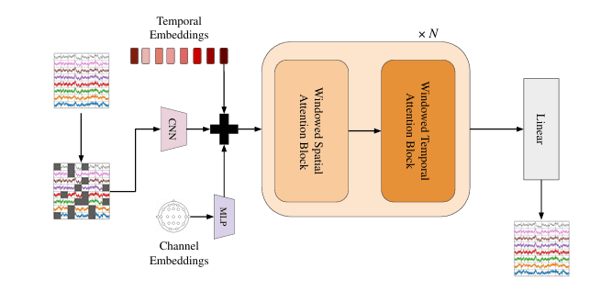
S-CEReBrO introduces a Windowed Alternating Attention mechanism designed to maintain constant attention-memory requirements as recordings become longer. According to the authors, the approach can process signals up to 100 times longer than full self-attention and three times longer than the low-rank linear-attention alternative evaluated in the study.
The model was pre-trained on more than 25,000 hours of EEG from over 12,000 individuals and achieved leading results in seven of 11 downstream tasks. Its architecture contains 2.4 million parameters.
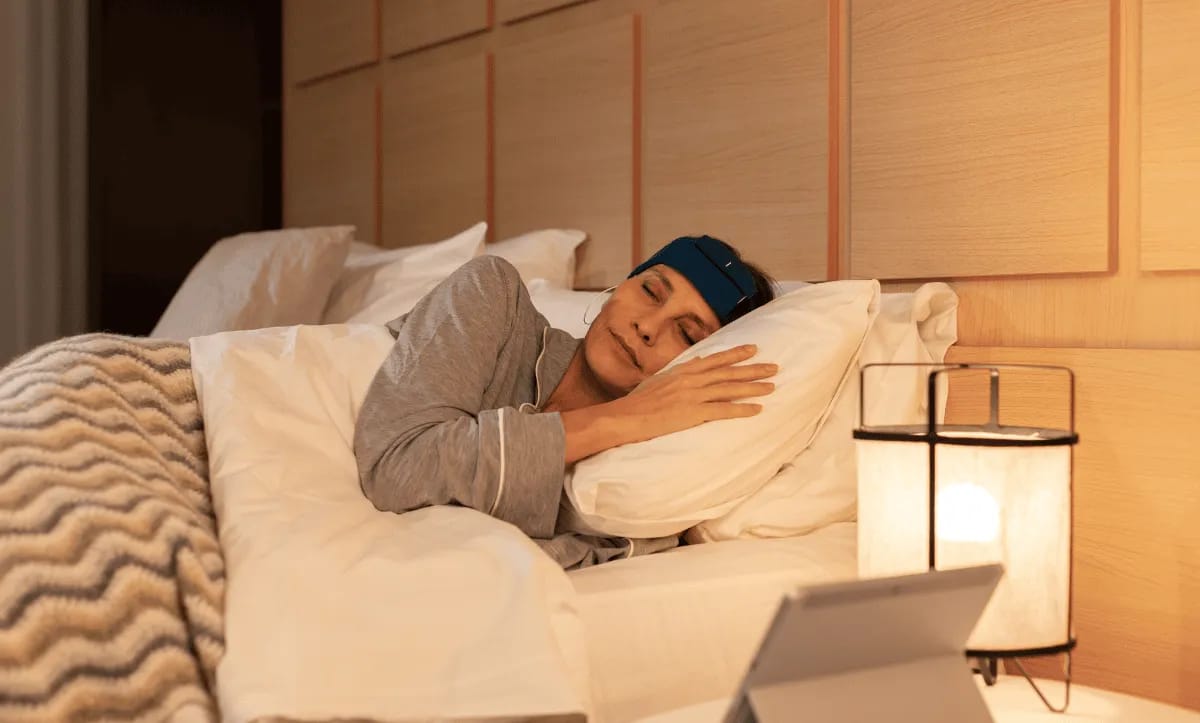
Among the datasets used in this research is Bitbrain Open Access Sleep (BOAS), created to support research bridging clinical polysomnography and wearable EEG. BOAS provides 128 nights of simultaneous recordings acquired with a Micromed PSG system and Bitbrain wearable EEG technology, together with sleep-stage labels.
The use of BOAS in S-CEReBrO illustrates how openly available EEG data can support research beyond its original purpose, enabling other teams to develop and evaluate new approaches to scalable, long-duration neural signal analysis.
The S-CEReBrO research was conducted by Glenn Anta Bucagu, Thorir Mar Ingolfsson, Yawei Li and Luca Benini, with researchers affiliated with ETH Zürich, Nanyang Technological University Singapore, and the University of Bologna.
Read the full article here.