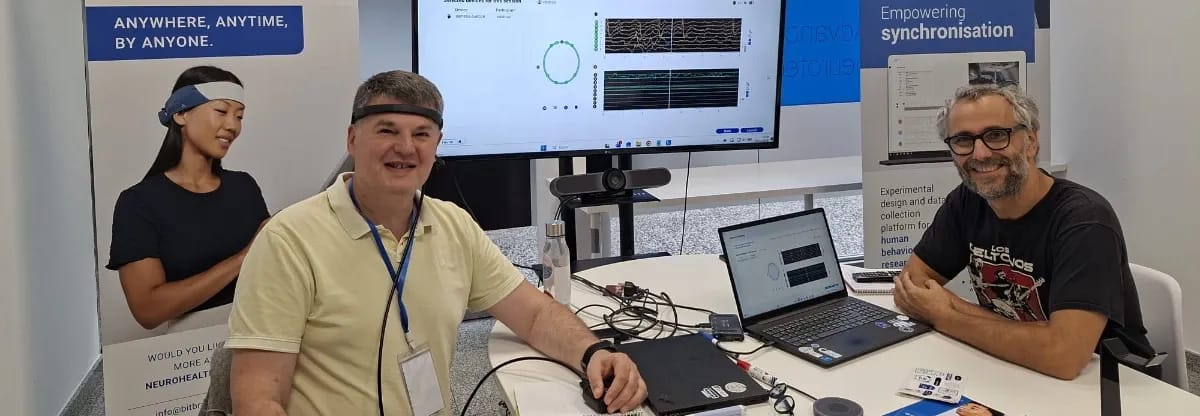
New Scientist highlights Bitbrain sleep research following promising Alzheimer's findings


The preprint, titled “One night of closed-loop auditory stimulation during sleep enhances memory consolidation in patients with Alzheimer’s Disease”, focuses on closed-loop auditory stimulation (CLAS). This technique detects the slow oscillations of deep sleep in real time and delivers sounds precisely synchronized with these brain rhythms. Previous studies suggest that slow oscillations play a key role in memory consolidation, making them a promising target for intervention.
The study goes beyond monitoring overnight brain activity: it explores whether neurotechnology can interact with these neural processes to improve cognitive outcomes. It is part of a broader research effort to move from sleep assessment toward sleep-based interventions.
One night of stimulation, measurable effects
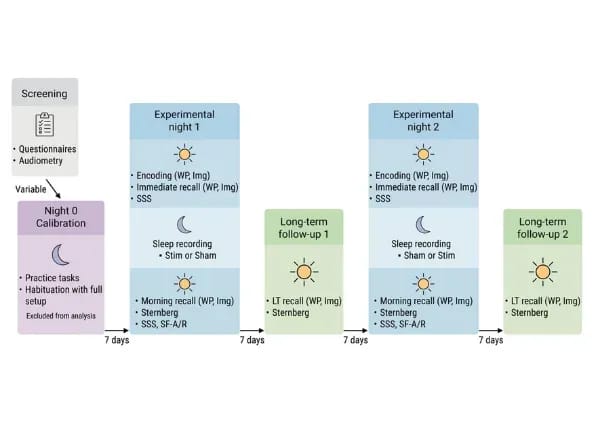
The researchers conducted a randomized, double-blind, placebo-controlled crossover trial in 37 patients with biomarker-confirmed early symptomatic AD. Each participant spent one night with active stimulation and one night with sham stimulation, in random order.
Compared with the sham night, a single night of CLAS significantly improved overnight memory consolidation, increased stimulation-evoked slow-wave and fast spindle activity, and preserved sleep architecture and subjective sleep quality.
These findings suggest that sleep-based interventions may offer a new avenue for supporting cognitive function in the early stages of AD. The next step is to determine whether these effects are sustained with multi-night interventions.
The work is the result of a collaboration between Bitbrain, and research partners Instituto de Investigación Sanitaria Aragón (IIS Aragón), Institut de Recerca Biomèdica de Lleida Fundació Dr. Pifarré (IRB Lleida), and Harvard Medical School, with funding from the Spanish Centre for the Development of Technology and Innovation (CDTI) and the Government of Aragón.
Featured in New Scientist
The study has been featured by New Scientist, highlighting the growing scientific interest in approaches that combine sleep research, neuroscience and neurotechnology.
Read the article: https://www.newscientist.com/article/2598656-pink-noise-played-during-sleep-shows-promise-for-alzheimers-memory-loss/
Read the full preprint: https://www.medrxiv.org/content/10.64898/2026.09.14.26360893v1.full-text