Products
Services
Applications
Science
About us
BlogContact

Science & Research

Not science fiction: how a P300 brain-computer interface brought EEG from the lab to the classroom

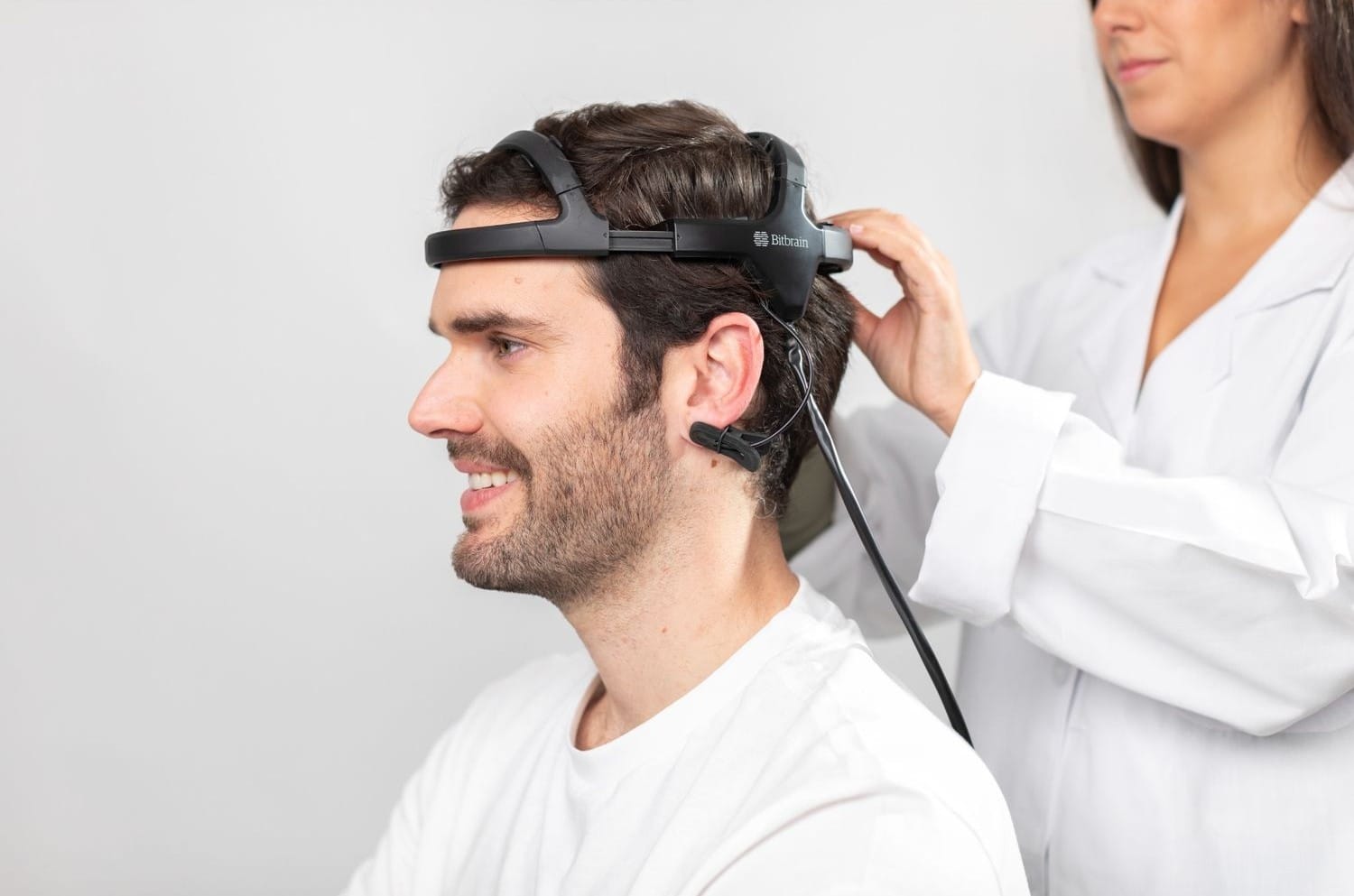
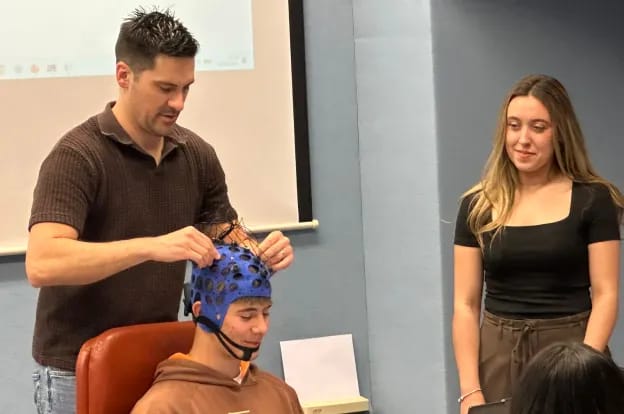
Can a computer figure out which number you are thinking of just by reading your brain activity? It sounds like science fiction, but it is a real and well-established technique. This spring, a team at the University of Granada used a Bitbrain Versatile EEG system to demonstrate exactly that, bringing brain-computer interface technology to nearly a hundred secondary-school students.
August 7, 2026

IAT and Priming Tests: Advances in Neuroscience and EEG Technology

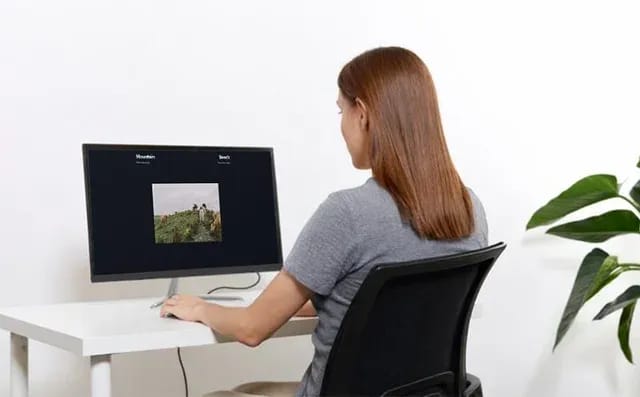
Implicit bias tests, particularly the Implicit Association Test (IAT) and priming-based paradigms, have long been used to investigate automatic associations that influence human judgment and behavior (Greenwald & Banaji, 1995; Greenwald et al., 1998). In recent years, advances in neuroscience and brain-monitoring technologies have expanded the methodological toolkit available to researchers studying implicit cognition (Forbes et al., 2012; Schiller et al., 2016; Yatsenko et al., 2025).
April 14, 2026

EEG and Virtual Reality: The Neuroadaptive Future of Neurotechnology

Can technology truly read our thoughts and emotions, and adapt the digital world in real time? What once belonged to science fiction is now possible, thanks to the convergence of electroencephalography (EEG) and virtual reality (VR). This fusion enables us not only to measure attention, emotion, and cognitive fatigue, but also to personalize digital experiences in real-time, fundamentally redefining human–machine interaction. With recent advances in portable EEG and VR technology, it is now possible to access and respond to a user’s brain state in real-time. This breakthrough is already enabling personalized rehabilitation, adaptive gaming, cognitive training, and clinical diagnostics, laying the groundwork for a new generation of neurotechnology solutions.
December 15, 2025

Fluently Project: Real-Time Biosignal Monitoring for Human-Robot Collaboration

The Fluently Project represents a paradigm shift in human-robot collaboration within industrial environments, aiming to optimize productivity while safeguarding worker well-being. By integrating advanced neurotechnology with AI-driven decision-making, Fluently enables industrial robots to adapt in real-time to an operator's cognitive and physical state. Through a novel human-machine interface, operators can command robots using natural speech and gestures, while their mental and physiological conditions are assessed via wearable devices like the Bitbrain Versatile Bio and Diadem EEG. The University of Applied Sciences and Arts of Southern Switzerland (SUPSI) contributions include the development of a privacy-preserving, multimodal pipeline capable of real-time mental state inference and adaptive robot behavior based on collaborative learning frameworks. This blog post explores the project’s objectives, technological infrastructure, and real-world applications, emphasizing how Fluently sets new standards for ethical, efficient, and human-centric automation.
November 18, 2025

How to Select a Dry-EEG Headset for your Research Application

Dry-EEG systems can open the door for the application of neuroscience in real-world settings, and the market to a new generation of products and services based on neurotechnology. However, there are many open questions related to their reliability, accuracy and signal quality. This post will give the reader solid arguments for selecting a technology that fits the application requirements.
July 16, 2025

How Deep Learning is changing machine learning AI in EEG data processing

Electroencephalography (EEG) offers a powerful window into the brain, capturing signals associated with cognition, behavior, and emotion. Beyond its use in neuroscience research, EEG technology is finding growing applications in healthcare, emotional monitoring, and even human performance enhancement. However, interpreting EEG data remains a complex challenge. The signals are often noisy, individualized, and can fluctuate significantly even within the same person over time. Traditional analytical methods struggle to handle this variability.
July 11, 2025

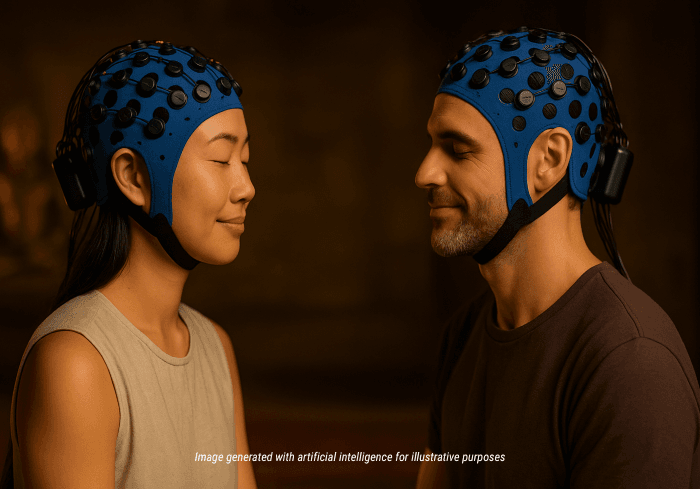
A Window into the Social Brain: How Collective Rituals Shape Neural Connection

We often think of contemplative practices as solitary experiences like meditating alone, practicing mindfulness, or silently reflecting. But across the world, many of these practices are shared. Whether it’s prayer circles, religious gatherings, or even large-scale concerts or sport events, collective rituals can have profound effects on the brain and the body (Paez, 2015; Hagerty, 2013). Researchers are only beginning to understand the mechanisms behind these effects and what they can tell us about human connection, neuroplasticity, and well-being (Davidson, 2012; Bhugra, 2024). 
June 29, 2025

Exploring the Science of Mind Wandering with Dr. Julia Kam

Mind wandering—those moments when our attention drifts from the task at hand—makes up 30 to 50 percent of our waking hours (McVay, 2007). Though often seen as a distraction, research shows it can foster creativity, emotional well-being, and mental rest (Kam, 2024). In this conversation with Dr. Julia Kam, whose award-winning research explores this everyday phenomenon, we delve into how mind wandering shapes our attention—an increasingly important topic in our post-pandemic world, especially in the context of focus and conditions like ADHD (Hasan, 2024).
June 4, 2025

EEG and Multimodal Research in Neuroscience: Technologies, Tools and Techniques

In this article, we will explore the value these combinations of technologies can bring to the research landscape, as well as how to evaluate the best options for each scenario. The study of human behaviour is not a new endeavour; it has been a subject of exploration for a long time. The observation of the actions, reactions and interactions of humans is a focal point of study in many different research scenarios. These interactions, whether occurring between individuals or prompted by external stimuli, provide information from participants' insights and environmental responses.
May 13, 2025

How EEG is Changing Driver Fatigue Detection in Real Time

Fatigue remains a significant but often underestimated threat to public safety, contributing to thousands of fatalities and costing billions annually. With the continuous advancements in EEG and AI, we are now positioned to detect fatigue proactively before it leads to accidents. From pilot cockpits and truck cabins to autonomous vehicles and control towers, EEG-based brain-monitoring systems provide a crucial layer of preventive safety.
May 7, 2025

What is QEEG Brain Mapping?

Quantitative Electroencephalography (QEEG), commonly called brain mapping, is a technique that applies mathematical methods to EEG data, focusing on power spectral analyses. This method generates quantitative metrics related to behavioral and cognitive brain functions.
April 30, 2025

Architectural Neuroimmunology: Do buildings impact the brain via the immune system?

By 2050, it is projected that two-thirds of the global population will live in cities (UN, 2018). Already it is estimated that residents in developed nations spend over 90% of their time in or around the built environment (Schweizer et al. 2007). However, there is still remarkably little known about the impact of architectural form on the human body. In response, this research project, conducted at the University of Cambridge, endeavoured to combine emerging insights from the disparate fields of architectural neuroscience and neuroimmunology. The following post will outline the objectives of the emerging field of architectural neuroimmunology and highlight some of the project's initial findings.  
April 15, 2025

How MEDUSA Simplifies EEG Brain-Computer Interface Research

Brain-computer interfaces (BCIs) are transforming neuroscience, but developing and running BCI experiments remains a challenge due to the complexity of existing software solutions. Researchers often struggle with signal acquisition, real-time processing, and experiment design, slowing down progress and limiting accessibility. MEDUSA, an open-source software platform, simplifies BCI research by providing intuitive tools for experiment design and implementation. This post explores its applications in neurofeedback, BCI-driven communication, device control, and cognitive neuroscience, highlighting how researchers can streamline their workflows, reduce technical burdens, and focus on data analysis and interpretation.
March 12, 2025

Fusion of fNIRS and EEG: a step further in brain activity research

The post delves into the synergy between fNIRS (functional Near-Infrared Spectroscopy) and EEG (Electroencephalography) technologies for advancing brain activity research. It highlights the unique strengths of each: fNIRS measures hemodynamic changes, while EEG captures neuronal electrical activity. Through their integration, researchers gain a deeper understanding of brain function, facilitating studies on cognitive processes and neurological disorders. The post emphasizes the benefits of fusion techniques, including enhanced spatial and temporal resolution, and offers examples of their applications in fields like neuroergonomics and neurofeedback.
April 24, 2024